Filipino Wedding Traditions: What to Expect as a Guest
Wednesday, September 16, 2026
Quick answer
A Filipino wedding usually opens with a church ceremony where sponsors (ninong and ninang) witness the vows, sometimes with candle, veil, cord and coin rites. The reception follows a set program of entrances, dances, a meal, speeches and games, and some couples add a money dance. Every custom is optional.
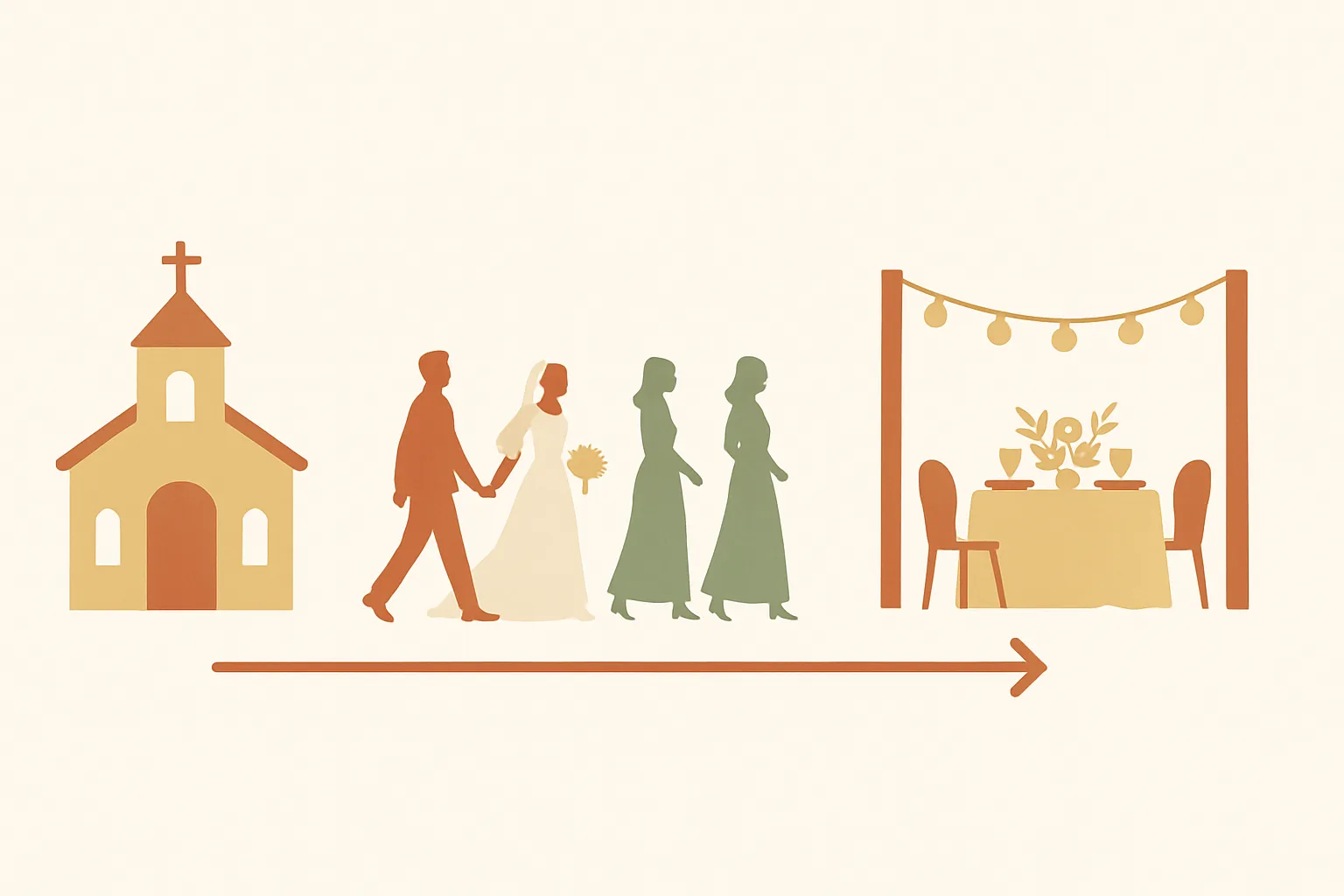
You have a Filipino wedding invitation and want to know what you are about to watch. This guide lists the traditions a guest is likely to see, in the order they happen, with where each one comes from. It is the guest's view. For arrival time, dress code, gifts and RSVP manners, see our Filipino wedding guest etiquette guide.
One caution first. Every custom below is optional, and each couple and parish decides. Treat this as what commonly appears, and let the invitation and the printed program overrule it.
Which ceremony you might be invited to
A church wedding is a likely invitation, but not the only one. About 78.8 percent of Filipinos reported Roman Catholic in the 2020 census (DZRH, citing the PSA). Marriage registrations tell a different story. Xinhua, reporting PSA data, says 43.3 percent of 2022 marriages were civil, about one third were Catholic, and about one in four were other religious rites (Xinhua).
| Ceremony | Setting | Typical length | What you notice |
|---|---|---|---|
| Catholic wedding Mass | Church, full Mass | 60 to 90 minutes | Communion is part of it |
| Catholic wedding liturgy | Church, no Mass | 30 to 45 minutes | Shorter, same processional and vows |
| Civil or garden ceremony | Judge, city hall or venue | Not sourced; ask | Depends on the couple |
The lengths come from Seiyaku's Filipino order of service. It adds that the Filipino rites can add 10 to 15 minutes. Most of the rites below sit inside the Catholic ceremony, so expect the fullest set there and ask the couple if you are unsure. Seiyaku's order has the entourage and sponsors enter, then the vows, the blessing and exchange of rings and what it labels "Optional Cultural Elements", with the signing of the marriage contract at the end. Our ceremony order guide explains the Mass itself.
Before the wedding
You may hear about these even if you never attend them.
| Tradition | What happens |
|---|---|
| Pamamanhikan | The groom and his parents visit the bride's parents to ask consent; the date, budget and guest list are discussed (Wikipedia) |
| Pa-alam | The couple visit relatives to announce the wedding, and personally deliver invitations (Wikipedia) |
| Despedida de soltera | A pre-wedding party for the bride, held by her family; Wikipedia compares its sentiment to a hen night |
So a relative may hand you an invitation in person. Our pamamanhikan guide compares eight sources on the visit.
At the ceremony
| Tradition | What you will see |
|---|---|
| Principal sponsors | Ninongs and ninangs stand as witnesses and sign the marriage contract (Nuptials.ph) |
| Entourage procession | Kasal.com's traditional order runs from the best man to the bride and her parents; couples vary it (Kasal.com) |
| Arrhae (13 coins) | After the rings, the groom gives 13 coins to the bride as a pledge to provide for her and their children (Wikipedia) |
| Candle ceremony | Candle sponsors light two candles beside the couple; the couple may then light one unity candle (Wikipedia) |
| Veil ceremony | Veil sponsors pin a veil over the couple, "clothing" them as one (Wikipedia) |
| Cord (yugal) ceremony | Cord sponsors place a figure-eight cord over the couple, read as "everlasting fidelity" (Wikipedia) |
| Signing of the marriage contract | The couple and witnesses sign, listed near the end of the service (Seiyaku) |
| Bouquet offered to Mary | Wikipedia says the bride traditionally offers her bouquet at a side altar before an image of the Virgin Mary or a patron saint |
| Rice and sampaguita | Wikipedia lists showering the couple with rice for prosperity and placing a sampaguita garland on them |
The Catholic rite outline lists the arras as an optional element, "a tradition important in Hispanic and Filipino families", so a couple may skip it. Where the veil and cord fall is decided by local custom, not one fixed rule. If you are wondering who those people are, our entourage list guide explains every role, and the secondary sponsors guide covers the three rites. For the coins in detail, see the arrhae section of the bearers guide.
Our advice: the sponsors perform these rites, so plan to watch from your seat and follow the ushers.
After the recessional comes photography. Our ceremony order guide notes that picture-taking is the biggest reason couples run past their booked slot and recommends leaving at least thirty minutes before guests reach the reception. If you are driving, our transportation and parking guide covers what to check on the invitation.
At the reception
This is the order in Bride and Breakfast's general reception guideline. Couples reorder or drop any of it.
| Tradition | What you will see |
|---|---|
| Welcome and thanks to sponsors | The host acknowledges both sets of parents and the principal sponsors |
| Entourage entrance | Secondary sponsors, then bridesmaids and groomsmen, then maid of honor and best man |
| The couple's grand entrance | Confetti, petals, dancing or a photo montage |
| Parent dances | Mother-son first, then father-daughter, into the couple's first dance |
| Cake cutting and toast | Before or after the meal |
| Thanksgiving prayer and meal | The prayer leads straight into the meal |
| Growing-up video | Shown late in or after the meal |
| Speeches | The best man and maid of honor, who are usually expected to speak, then others |
| Bouquet and garter games | Bride and Breakfast puts them after the speeches if a couple keeps them |
| Parents' messages | Near the close of the program, after the games |
| Same-day edit video | Late in the program, if the couple has one |
| Closing remarks | The couple thank guests and suppliers |
Two more customs have no sourced slot in that order, so ask when they happen:
| Optional custom | What you will see |
|---|---|
| Money dance | Guests pin money on the couple while dancing (see below) |
| Dove release | Wikipedia says it is typical to release a pair of white doves for harmony and peace |
Two sources disagree here. Bride and Breakfast treats the bouquet and garter games as an option a traditional couple keeps, while Wikipedia calls a bouquet toss "for the most part uncommon". Both are describing choices, so read the program.
On length, our sample program in the reception program timeline runs about three hours without its optional segments (money dance, games and same-day edit) and about three and a half with them. It is our sample, not a rule, and dinner is the longest block. That guide has a full run sheet, and the emcee script shows the lines a host reads at each step.
The money dance in detail
Wikipedia's entry on the money dance describes the Filipino version: men line up in front of the bride and pin money to her dress or veil, then dance with her. The same happens with the groom, and women line up to pin money on his clothing. It reads the pinned money as a wish for good fortune "rained" on the couple, and as a way to help them start out financially.
Our advice, not a rule from those sources: the sources above give no amount, so bring what you are comfortable giving, and check the program because not every couple includes it. If the couple takes digital gifts instead, our GCash gift guide explains how those work.
What you will be served
The reception is a meal, and often a big one. Barong Tagalog USA lists adobo, lechon (roasted pig), pancit (noodles) and desserts as typical dishes. If you have dietary needs, tell the couple when you RSVP, not at the buffet.
Customs versus the data
Some old custom claims do not match current numbers. Wikipedia says Philippine weddings are commonly held in June. PSA figures reported by Xinhua show December was the most popular month in 2022, with 12.4 percent of registered marriages, ahead of February and April. Do not assume a June date, and do not assume a Catholic church either. Read the invitation.
The short version
- The couple's invitation and program overrule every custom listed here.
- Expect sponsors, an entourage, and possibly the candle, veil, cord and coin rites in a Catholic ceremony.
- Allow half an hour or more between ceremony and reception for photos.
- The reception has a program: entrances, dances, meal, speeches, games. Ask the couple about a money dance.
- Couples using Imbitasyon Ko list their entourage under group headings on the invitation page, so guests can see who the sponsors and bearers are before the day.
Frequently asked questions
What are the most common Filipino wedding traditions?
The ones guests most often meet are principal sponsors called ninong and ninang, the candle, veil, cord and coin rites in a Catholic ceremony, the entourage entrance at the reception, parent dances, speeches and, in some weddings, the money dance. Couples choose which to include.
Are most Filipino weddings held in a Catholic church?
Not most, according to Philippine Statistics Authority figures reported by Xinhua: in 2022, 43.3 percent of registered marriages were civil, about one third were Catholic, and about one in four were other religious rites. About 78.8 percent of Filipinos are Roman Catholic, so a church wedding is still a likely invitation.
What happens at a Filipino Catholic wedding ceremony?
The entourage and sponsors process in, the couple exchange vows and blessed rings. Optional Filipino rites such as the arrhae (13 coins), veil and cord may follow. A full wedding Mass runs about 60 to 90 minutes, and a liturgy without Mass about 30 to 45.
What is the money dance at a Filipino wedding?
It is a reception custom where guests pin money to the couple's clothing while dancing with them. Wikipedia describes men lining up to dance with the bride and women with the groom. Not every couple includes it, so check the program or ask.
Do guests join in the candle, veil and cord ceremonies?
Wikipedia and Nuptials.ph describe those rites as performed by the secondary sponsors, the candle, veil and cord sponsors. Our advice is to plan to watch from your seat and follow the ushers. Which rites are included, and when, is decided by the couple and their parish.
How is a Filipino wedding reception different from a Western one?
It follows a structured program: the entourage is announced before the couple, and the couple's parents get their own dances and speeches. Bride and Breakfast's sample order has both parent dances before the couple's first dance and the parents' speeches near the end.